
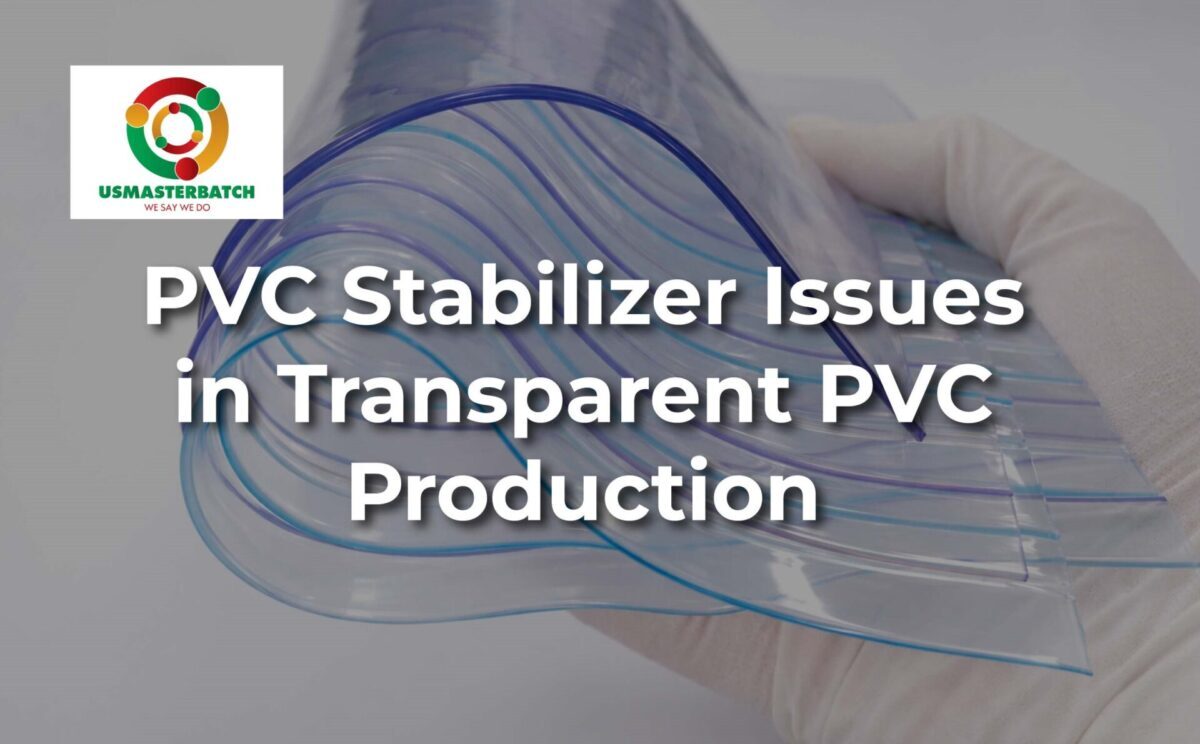
Unlike opaque formulations where fillers and pigments can mask minor flaws, crystal-clear applications leave zero margin for haze, yellowing, or plate-out. Selecting an incompatible PVC stabilizer or dosing it improperly can quickly trigger thermal degradation during high-shear extrusion or calendering, resulting in dark streaks and loss of optical clarity. Furthermore, poor dispersion or suboptimal lubrication balance within the PVC stabilizer system often causes die build-up, surface roughness, and frequent line stoppages for cleaning.
Seasoned formulators also watch how a PVC stabilizer interacts with plasticizers, impact modifiers, and internal or external lubricants under fluctuating ambient conditions and varying batch histories. When processing temperatures drift upward, an under-performing PVC stabilizer may fail to scavenge released hydrogen chloride fast enough, accelerating zipper dehydrochlorination and compromising long-term weatherability. By pairing the right PVC stabilizer chemistry with disciplined temperature profiles, clean raw material handling, and targeted lubrication tuning, processors can safeguard clarity while keeping throughput steady and scrap rates low.
1. Transparency Issues
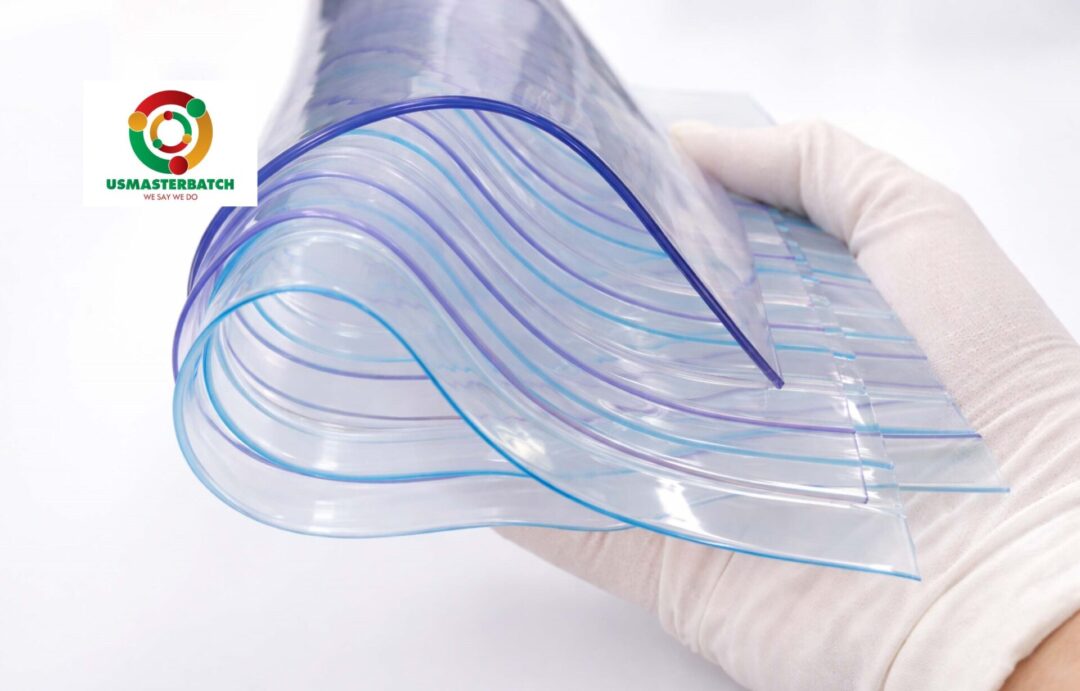
(Illustrative purpose only)
One of the key advantages of this product is its high transparency. However, improper selection of stabilizers can reduce the transparency of the sheet. Excessive addition may further affect the product’s appearance and market competitiveness.
Solution: Choose transparent stabilizers with excellent compatibility with PVC and strictly control the mixing ratio to ensure the film remains clear and glossy.
Tin stabilizers are considered the best and provide the highest level of transparency known.
2. Thermal Yellowing
During high-temperature processing, insufficient thermal stability can cause PVC to degrade. This leads to yellowing of the plastic sheets and seriously affects product quality.
Solution: Use high-performance thermal stabilizers and optimize processing temperatures to avoid overheating and degradation.
3. Stabilizer Migration
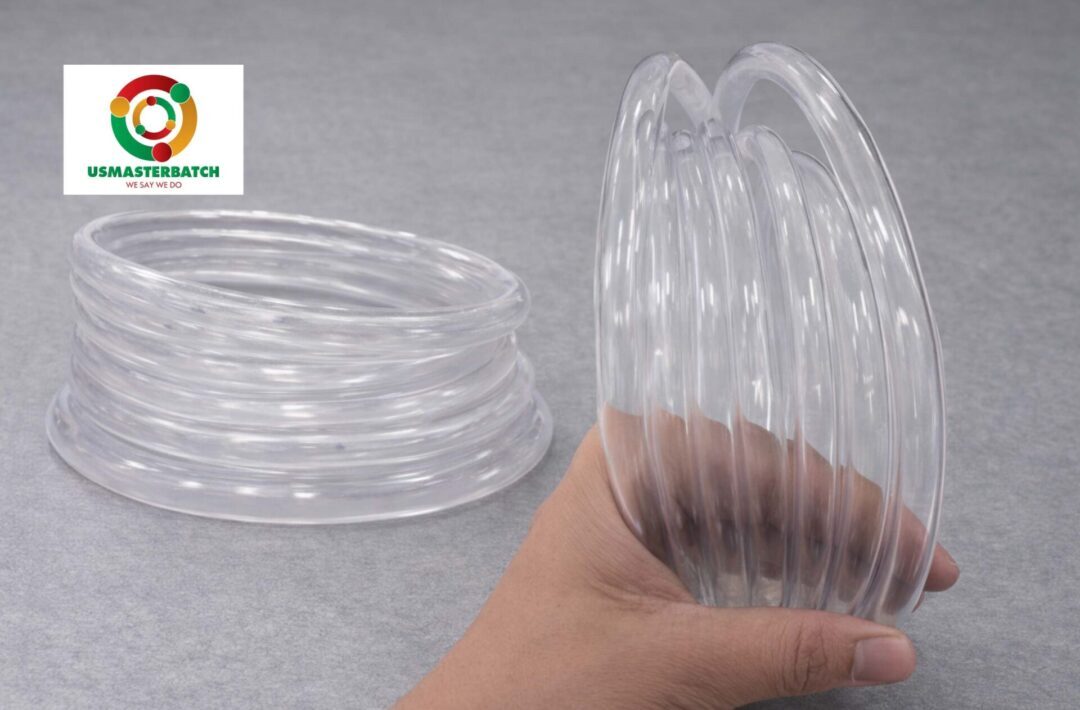
(Illustrative purpose only)
- If the stabilizer has poor compatibility with PVC, it may migrate to the surface of the sheet, causing surface blooming or uneven coloration. This not only affects appearance but may also reduce the physical properties of the product.
Solution: Select stabilizers with excellent compatibility with PVC and prevent migration issues through proper formulation. In transparent PVC production, opting for high-molecular-weight liquid stabilizers - such as specialized organotin or clear liquid calcium-zinc systems - significantly reduces volatility and leaching to the surface. Additionally, balancing the ratio of primary and secondary stabilizers alongside compatible co-stabilizers like epoxidized soybean oil (ESBO) enhances solubility within the polymer matrix. Formulators should also minimize excess internal lubricants that can carry additives outward during processing. By optimizing fusion temperatures and ensuring uniform dispersion during compounding, the stabilizer remains securely anchored inside the PVC structure, preserving optical clarity and preventing surface blooming or plate-out.
In the production of transparent PVC products such as films, pipes, masks, and medical tubing, stabilizers play an extremely important role. As a stabilizer manufacturer, US MASTERBATCH is committed to providing high-performance and environmentally friendly PVC stabilizers to help address issues such as reduced transparency, yellowing, and migration.
Our products can significantly improve PVC product quality while ensuring stable and efficient production. If you are facing these common issues, please contact us to learn more about our PVC stabilizer solutions and receive technical support.