
Among widely used polymer materials, Polyvinyl Chloride (PVC Plastic) is recognized as one of the most versatile and reliable plastics in modern industry. Thanks to its adaptability, durability, and cost efficiency, PVC has become an indispensable material across a wide range of sectors, from large-scale infrastructure projects to everyday consumer products.
1. Construction Industry – The Backbone of PVC Applications
The construction sector is the largest consumer of PVC worldwide, accounting for more than half of total PVC demand. PVC is favored for its resistance to corrosion, light weight, mechanical strength, and ease of installation, making it suitable for both residential and industrial buildings.
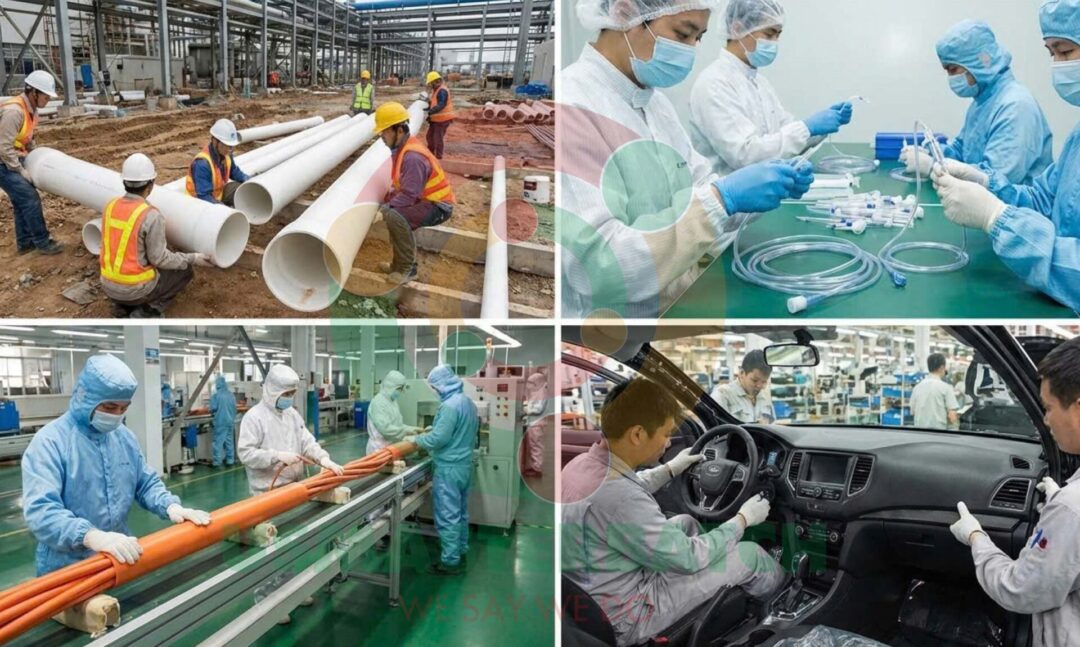
- Water supply and drainage systems: PVC pipes are widely used in potable water, wastewater, and stormwater systems. Their smooth inner surface reduces friction losses, minimizes scaling, and ensures stable flow over long service periods.
- Window frames and profiles: PVC profiles are commonly used in doors, windows, and partitions. They provide good thermal insulation, sound reduction, and weather resistance, contributing to energy efficiency in modern buildings.
- Wall, ceiling, and cladding panels: PVC panels are moisture-resistant, easy to clean, and suitable for humid or coastal environments where traditional materials may deteriorate quickly.
2. Electrical and Electronics Applications
PVC plays a critical role in the electrical and electronics industry due to its excellent insulating properties and inherent flame-retardant behavior.
- Wire and cable insulation: PVC compounds are extensively used as insulation and sheathing materials for power cables, communication cables, and control wires in residential, commercial, and industrial applications.
- Electrical conduits and accessories: PVC conduits, junction boxes, fittings, and protective casings help organize wiring systems while ensuring electrical safety and durability.
3. Medical and Healthcare Applications
In the medical sector, PVC is widely used because it can be easily processed into flexible or rigid forms and can withstand common sterilization methods.
- Blood bags, IV bags, and tubing: PVC enables safe, disposable medical products that reduce contamination risks and improve hygiene standards in hospitals and clinics.
- Medical devices and accessories: Oxygen masks, breathing tubes, gloves, and various disposable medical components rely on flexible PVC for comfort, reliability, and performance during treatment.
4. Automotive and Transportation Industry
To improve fuel efficiency and reduce manufacturing costs, the automotive industry increasingly incorporates PVC into vehicle design.
- Interior components: Dashboards, door panels, seat coverings, floor mats, and synthetic leather materials made from PVC provide durability, aesthetic appeal, and resistance to wear and UV exposure.
- Protective coatings and insulation: PVC-based underbody coatings protect metal parts from corrosion, road debris, and moisture while also contributing to noise and vibration reduction.
5. Industrial and Manufacturing Applications
PVC is widely used in factories, workshops, and industrial facilities due to its robustness and flexibility in design.
- Industrial hoses and tubing: Flexible PVC hoses are used to transport air, water, light oils, and non-corrosive liquids in manufacturing processes.
- Industrial flooring: PVC flooring systems offer anti-slip, anti-static, and easy-to-maintain surfaces for factories, warehouses, laboratories, and clean rooms.
- PVC strip curtains: Commonly installed in cold storage facilities, food processing plants, and production areas to control temperature, dust, and noise while allowing easy movement.
6. Agriculture and Aquaculture
In agriculture and aquaculture, PVC provides practical and economical solutions for water management and infrastructure.
- Irrigation systems: PVC pipes and fittings are used in drip irrigation, sprinkler systems, and water distribution networks, supporting efficient water use in modern farming.
- Aquaculture facilities: PVC piping systems are widely applied in fish and shrimp farming for water circulation, drainage, and filtration systems.
7. Consumer Goods, Packaging, and Advertising
PVC plastic is deeply integrated into daily life through a wide range of consumer and commercial products.
- Consumer goods: Raincoats, boots, slippers, synthetic leather items, household mats, and plastic films commonly use PVC due to its flexibility and durability.
- Packaging and protective materials: PVC films and sheets are used for wrapping, covering, and protecting products.
- Advertising and display: PVC banners, tarpaulins, foam boards, signage, and exhibition materials are popular because they are lightweight, printable, and suitable for both indoor and outdoor use.
With its broad application range, long service life, and cost advantages, PVC continues to be a key material supporting industrial development and modern living standards. Its ability to meet diverse functional requirements makes PVC an essential material across multiple industries worldwide.