Tin Stabilizers – Advantages, Types & Industrial Applications
[US Masterbatch] Tin Stabilizers play a critical role in PVC processing by ensuring both processability and final product quality. In the plastics industry, they are considered one of the most effective and premium heat stabilizer solutions available today. This article provides a comprehensive overview of their concept, working mechanism, advantages, limitations, and real-world applications.
-
What is a Tin Stabilizer?
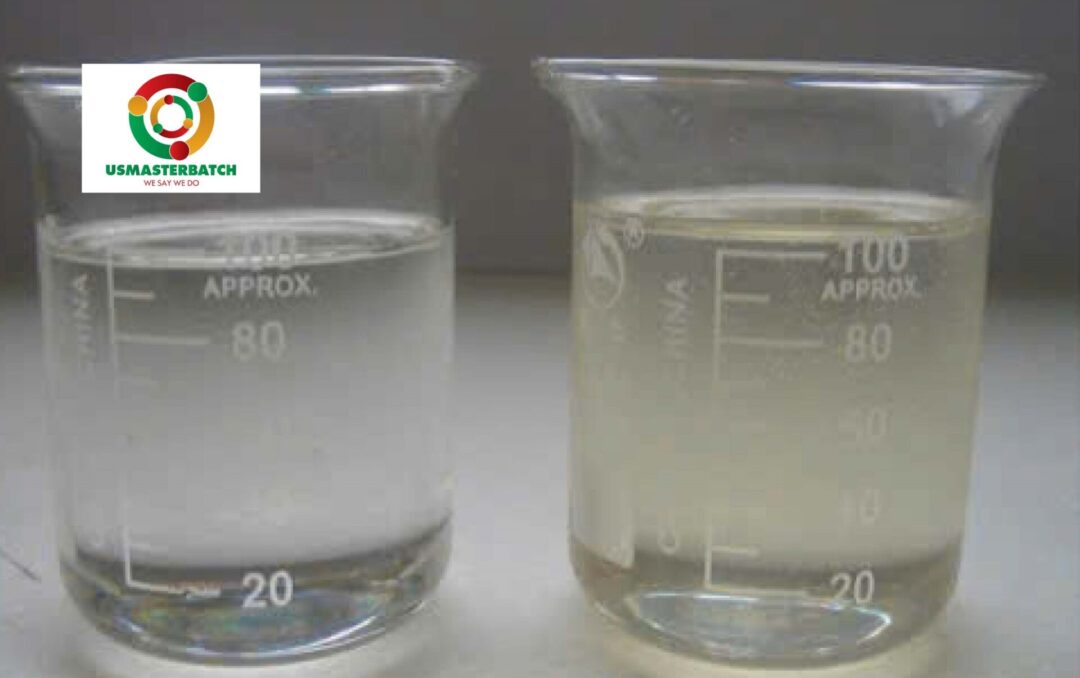
(Illustrative purpose only)
These additives (also known as organotin stabilizers) are a group of heat stabilizers based on organotin compounds, primarily used in PVC processing. Their main function is to prevent the thermal degradation of PVC during processing methods such as extrusion, injection molding, and calendaring.
Common types:
- Methyl tin stabilizers
- Butyl tin stabilizers
- Octyl tin stabilizers
Among these, methyl tin stabilizers are the most widely used for applications requiring high transparency, such as clear sheets, bottles, and transparent pipes.
-
Why Does PVC Need Heat Stabilizers?
PVC (Polyvinyl Chloride) contains chlorine atoms in its molecular structure. When exposed to elevated temperatures (typically above 140–160°C), PVC tends to degrade through a process called dehydrochlorination, releasing hydrogen chloride (HCl).
Consequences of this degradation include:
- Discoloration (from white to yellow, brown, then black)
- Loss of mechanical properties (becoming brittle and weak)
- Reduced long-term stability
Therefore, heat stabilizers are essential to:
- Prevent or slow down degradation
- Maintain color and mechanical strength
- Ensure stable processing conditions
-
Mechanism of Action of Tin Stabilizers
The additives function through multiple mechanisms:
- HCl Scavenging
They react with and neutralize HCl released during degradation, preventing autocatalytic chain reactions.
- Substitution of Labile Chlorine
They replace unstable chlorine atoms in the PVC chain with more stable groups, enhancing thermal stability.
- Antioxidant Effect
Some of them also provide resistance against oxidation, improving long-term heat stability.
Thanks to these combined mechanisms, these additives deliver superior stabilization performance compared to many alternative systems.
-
Advantages of Tin Stabilizers
Excellent Heat Stability
They provide outstanding protection during high-temperature processing and extended processing cycles.
High Transparency
One of the most significant advantages. These additives do not impair clarity, making them ideal for transparent applications.
Good Processability
- Reduced risk of burning
- Improved melt flow
- Lower plate-out on equipment
Color Stability
Products retain a bright and clean appearance with minimal yellowing.
Compliance with Safety Standards
Certain types, especially methyl tin stabilizers, meet requirements for food contact and potable water applications.
-
Limitations of Tin Stabilizers
(Illustrative purpose only)
Higher Cost
Compared to systems such as Ca-Zn or lead-based stabilizers, tin stabilizers are more expensive.
Formulation Sensitivity
They require careful optimization with other additives (lubricants, fillers, impact modifiers) for best performance.
Processing Control Required
Improper dosage or unsuitable processing conditions can reduce effectiveness.
-
Applications of Tin Stabilizers
These additives are widely used in high quality PVC applications, particularly where clarity and performance are critical.
Transparent PVC Pipes
- Water pipes
- Medical tubing
- Industrial tubing
Rigid Transparent Sheets
- Food packaging
- Thermoforming sheets
- Display and advertising panels
Bottles and Packaging
- Water bottles
- Oil containers
- Cosmetic packaging
High-End Profiles and Fittings
Used in applications requiring excellent whiteness and long-term stability.
Food Contact Applications
Especially methyl tin stabilizers, which comply with FDA and EU food safety standards.
-
Comparison with Other Stabilizer Systems
| Criteria | Tin Stabilizers | Ca-Zn Stabilizers | Lead Stabilizers |
|---|---|---|---|
| Heat Stability | Very high | Medium to high | High |
| Transparency | Excellent | Limited | Poor |
| Cost | High | Moderate | Low |
| Environmental Safety | Good | Excellent | Poor (restricted) |
| Main Applications | High-end products | Pipes, profiles | Traditional pipes, cables |
There is a clear industry shift away from lead-based stabilizers toward Ca-Zn and tin systems due to environmental and health regulations.
-
Tin Stabilizers Market Trends and Regulations
With increasingly stringent regulations such as EU REACH, the use of safe and environmentally friendly stabilizers is becoming essential.
These additives, particularly methyl tin:
- Are widely accepted under international standards
- Suitable for export markets such as Europe and the U.S.
- Meet food contact and potable water safety requirements
However, manufacturers must ensure:
- Traceable and reliable sourcing
- Compliance with regulatory limits
- Complete technical documentation (TDS, SDS, compliance certificates)
-
Key Selecting Considerations
When formulating PVC compounds, it is important to consider:
- Type of application (transparent vs. opaque)
- Processing conditions (temperature, residence time)
- Compatibility with other additives
- Regulatory requirements (food contact, export compliance)
Practical trials are strongly recommended to optimize formulations rather than relying solely on theoretical data.
Conclusion
Tin stabilizers are among the most effective heat stabilization solutions for PVC, especially in applications requiring high transparency, aesthetic quality, and strict safety standards. Although they come at a higher cost, the value they deliver in terms of product performance and market acceptance makes them a worthwhile investment.
In the context of sustainable development and global regulatory compliance, these additives will continue to play a key role in the modern PVC industry. Companies such as US Masterbatch are part of the growing global PVC additive market.