PP Filler Masterbatch: Improving Cost & Technical Performance
PP Filler Masterbatch is widely used in the plastics industry to improve production efficiency and optimize manufacturing costs. Thanks to its versatility and compatibility with various polypropylene applications, it has become an important solution for manufacturers seeking better product performance and stable processing conditions. This article provides an overview of its applications, advantages, and role in modern plastic production.
1. What is PP Filler Masterbatch?
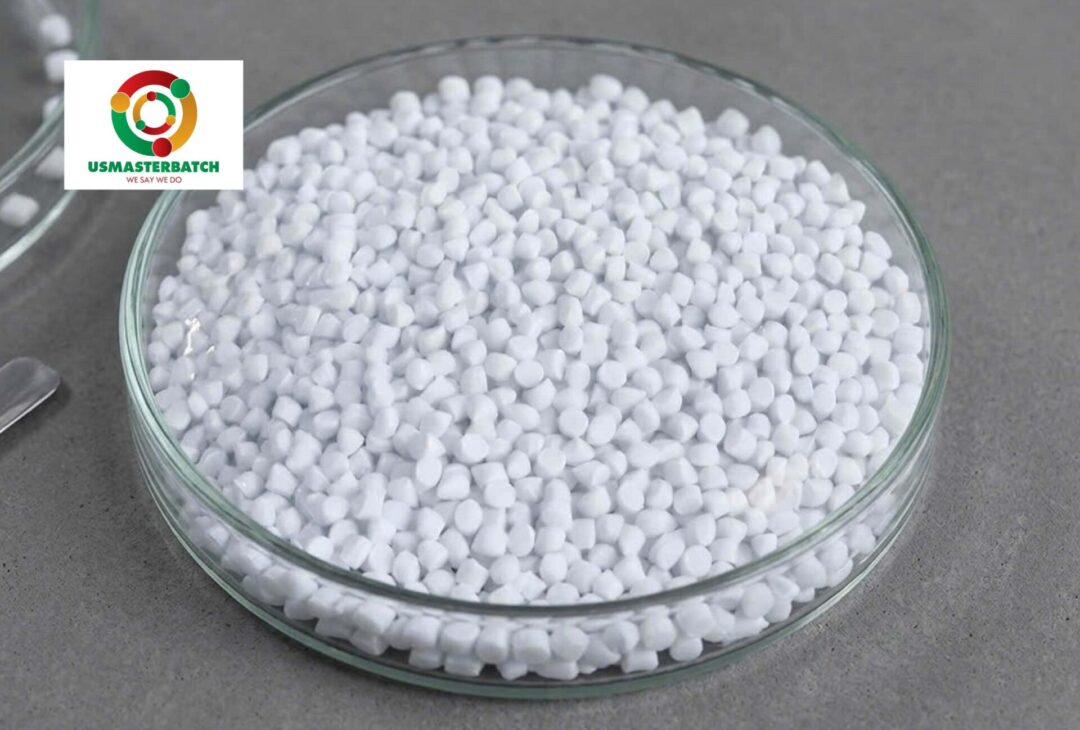
(Illustrative purpose only)
PP Filler Masterbatch is a pelletized compound engineered from three essential components, compounded and pelletized via high-tech twin-screw or advanced triple-screw extrusion systems:
- Inorganic Mineral Filler (CaCO3): Accounting for a dominant proportion from 75% to 85% of the total formulation. To guarantee premium masterbatch quality, the calcium carbonate powder must be ultra-fine, sourced from high-whiteness limestone quarries, and strictly controlled for Particle Size Distribution (PSD) utilizing advanced laser diffraction instruments like the Mastersizer. The average particle size (D50) typically ranges between 1.0 micro – 3.0 micro, effectively preventing agglomeration and reducing machine barrel wear.
- Carrier Resin: Virgin Polypropylene (PP) resin, selected with an appropriate Melt Flow Index (MFI) tailored to the specific downstream processing method (e.g., PP Homopolymer for high-speed raffia extrusion, or PP Copolymer for injection molding and thermoforming).
- Dispersion and Processing Additives: Including specialized coupling agents (such as silane or titanate functional agents), PE wax, and lubricants. This additive matrix encapsulates the naturally hydrophilic surface of CaCO3 particles, transforming them into a hydrophobic state that disperses seamlessly into the non-polar PP polymer matrix without causing phase separation or generating free radicals.
2. Technical Impacts of PP Filler on Plastic Mechanical Properties
Many plastic processors mistakenly perceive filler masterbatch as a mere “cheap loading material” to lower production costs. In reality, when incorporated at precise technical dosages, PP Filler Masterbatch serves as a functional structural modifier for the polymer:
- Increased Stiffness and Flexural Modulus: The inherent rigid crystalline structure of CaCO3 enhances the load-bearing capacity of the final parts and drastically minimizes post-molding shrinkage during cooling.
- Optimized Thermal Conductivity and Cycle Time: Because CaCO3 possesses significantly higher thermal conductivity than raw PP resin, the polymer melt cools down at a much faster rate inside the mold cavities. This technical property shortens the mold cycle time by 10% to 25%, boosting overall plant productivity.
- Surface Quality Refinement: The micro-topography imparted by ultra-fine filler gives the product surface a subtle matte finish, enhancing ink adhesion during printing processes without requiring aggressive corona treatment, while simultaneously reducing static charge and dust accumulation.
3. Downstream Sectors of Application
PP Filler Masterbatch is strategically formulated to serve diverse manufacturing processes. Below are the key industrial applications classified by US Masterbatch’s high-grade product lines:
3.1. PP Raffia Extrusion (Woven Bags, FIBC, and Jumbo Bags)
This sector represents the largest global volume consumer of PP fillers. Product grades such as UF205 and UF207 (containing 80% – 82% ultra-fine CaCO3) are precisely optimized for high-speed tape stretching lines.
- Benefits: They prevent tape fibrillating, maintain optimal tensile strength, control elongation, and reduce blade wear during the high-speed weaving process.
3.2. PP Spunbond Non-Woven Fabric
The manufacturing of eco-friendly shopping bags, medical face masks, and hygienic diapers demands an immaculate dispersion of filler particles to prevent any clogging of microscopic spinneret dies. Our UF203NW grade (78% ultra-fine CaCO3) satisfies rigid melt filtration metrics, ensuring consistent web formation, softness, and fabric durability.
3.3. Thermoforming and Hollow Boards
In the mass production of disposable plastic cups, food containers, and PP hollow corrugated sheets, PP filler helps retain crisp part profiles, upgrades vertical top-load strength, and boosts heat distortion temperatures.
3.4. PP Injection Molding & Strapping Tapes
For structural housewares, industrial furniture, or high-tension heavy-duty strapping tapes (PP straps), the UF212 grade — featuring a high mineral load of up to 85% — enables manufacturers to achieve maximum part rigidity and prevent post-molding warpage.
4. Leading Global Manufacturers of PP Filler Masterbatch
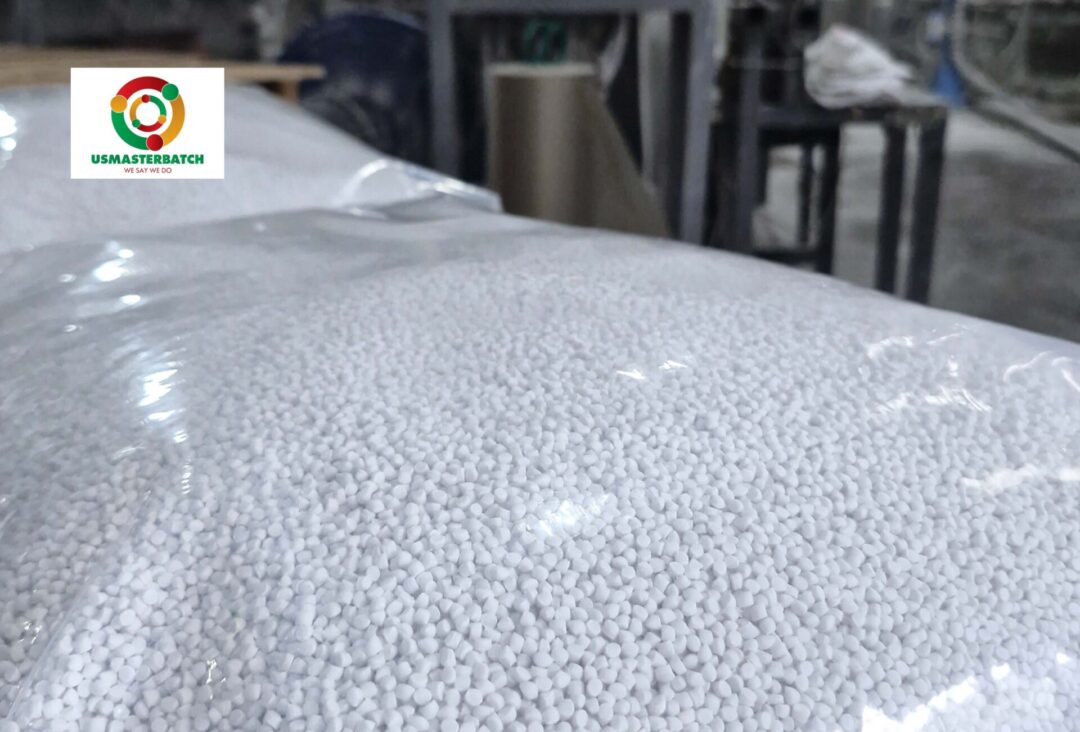
(Illustrative purpose only)
The global PP filler masterbatch supply chain is highly competitive, led by regions possessing elite-quality natural limestone reserves, notably Southeast Asia, the Middle East, and Europe. Here are the prominent names driving the industry:
4.1. US MASTERBATCH JSC (Vietnam)
Strategically located in Vietnam, a country globally renowned for owning limestone reserves of exceptional chemical purity, high whiteness, and brightness, US Masterbatch has established itself as an elite market leader and prominent exporter.
- Production Capability: Operates 03 state-of-the-art factories located near Hanoi, Hung Yen and Tay Ninh provinces, delivering a massive aggregate capacity of 408,000 metric tons per annum.
- Technological Infrastructure: Utilizing cutting-edge Triple Screw Extruder Lines synchronized with electronically controlled automatic feeding systems and centralized dust collection units. The fully integrated R&D lab hosts Melt Flow Index Testers, Lab Blown Film Machines, and Mastersizer particle analyzers, ensuring all products proudly hold ISO 9001:2015, REACH, and EU Food Contact Regulation N°10/2011 certifications.
- Corporate Philosophy: Firmly bound by the corporate mantra “We Say We Do”, ensuring absolute batch-to-batch consistency and technical reliability for global strategic clients.
4.2. Other Major Global Suppliers
- Astra Polymers (Saudi Arabia): A dominant force based in the Middle East, leveraging direct domestic access to massive upstream petrochemical feedstocks like SABIC’s premium PP resins. They specialize in advanced masterbatch compounding for heavy industrial packaging and oil-gas infrastructure.
- Plastika Kritis (Greece): A European pioneer with decades of compounding heritage, highly acclaimed across the globe for specialized masterbatches and functional fillers deployed in agricultural film engineering and greenhouse applications.
- Heritage Plastics (USA): A North American pioneer focused on creating eco-conscious mineral-filled polyolefin concentrates that actively reduce carbon footprints across modern consumer goods supply chains.
5. Conclusion: Choosing the Right Strategic Compounding Partner
PP Filler Masterbatch has evolved from a basic cost-cutting additive into a sophisticated functional modifier vital for modern high-efficiency plastics processing. Securing a long-term partnership with an accredited, R&D-driven manufacturer like US Masterbatch ensures your production lines maintain superior mechanical consistency and peak profitability in a demanding global market.