UV Resistance of PP
In the modern plastics industry, Polypropylene (PP) is one of the most widely used polymers due to its excellent mechanical properties, chemical resistance, and cost-effectiveness. However, PP has a “formidable enemy” when used in outdoor environments: sunlight. This article explores the technical nuances of UV Resistance and how US Masterbatch can help you maximize your product’s lifespan.
1. What is UV Resistance in Polypropylene?
UV Resistance refers to a material’s ability to withstand degradation caused by ultraviolet radiation.
From a chemical perspective, Polypropylene contains tertiary carbon atoms in its backbone that are particularly vulnerable. When exposed to UV radiation (specifically wavelengths between 290nm and 400nm), these chemical bonds break down, creating free radicals. This destructive process is known as Photo-oxidation.
Common signs of UV-degraded Polypropylene:
- Discoloration: The product turns yellow or fades (chalking).
- Embrittlement: Micro-cracks appear on the surface (crazing).
- Loss of Mechanical Strength: Tensile strength and impact resistance drop sharply, leading to structural failure.
- Surface Erosion: A white, powdery residue forms on the surface.
2. US Masterbatch: Your Partner in UV Resistance Polymer Excellence
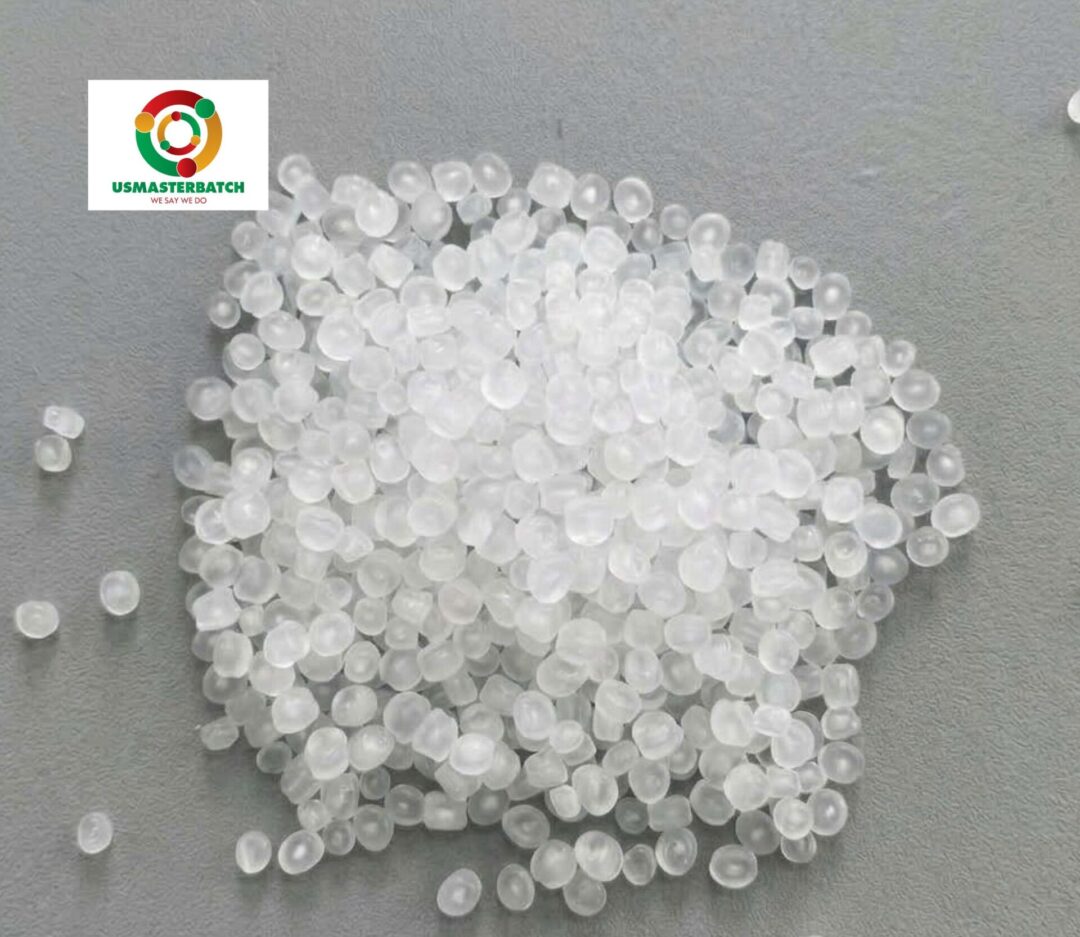
(Illustrative purposes only)
At US Masterbatch, we believe that providing high-quality raw materials is only half the job. Our true value lies in helping you navigate the complexities of polymer science.
As a leading manufacturer of additive masterbatches, we don’t just supply products; we provide engineered solutions. Our technical team works closely with manufacturers to analyze the specific environmental conditions their products will face — whether it’s the intense heat of the desert or the high humidity of tropical regions — to ensure the perfect additive formulation.
3. Why UV Resistance Knowledge is Essential for Your Business
Understanding UV resistance isn’t just for lab technicians; it is a critical business strategy. Here is why it matters:
Protecting Brand Reputation
Imagine a line of outdoor stadium seats or heavy-duty FIBC bags (Big Bags) disintegrating after only a few months of sun exposure. Such failures can devastate a brand’s reputation. By mastering UV resistance, you ensure consistent quality and long-term reliability.
Cost Optimization
Not every product requires the same level of UV protection. Indoor products differ vastly from those exported to high-radiation zones like Africa or the Middle East. Understanding UV Resistance allows you to use the precise dosage of additives — saving costs while maintaining performance.
Expanding Market Applications
When PP is equipped with the right “sunscreen”, it can replace more expensive materials in demanding sectors:
- Agriculture: Shade nets, greenhouse films, and mulch films.
- Construction: Geotextiles, pipes, and artificial turf.
- Logistics: Pallets, crates, and industrial tarpaulins.
4. Advanced Solutions: UV770 and UV783 Additives
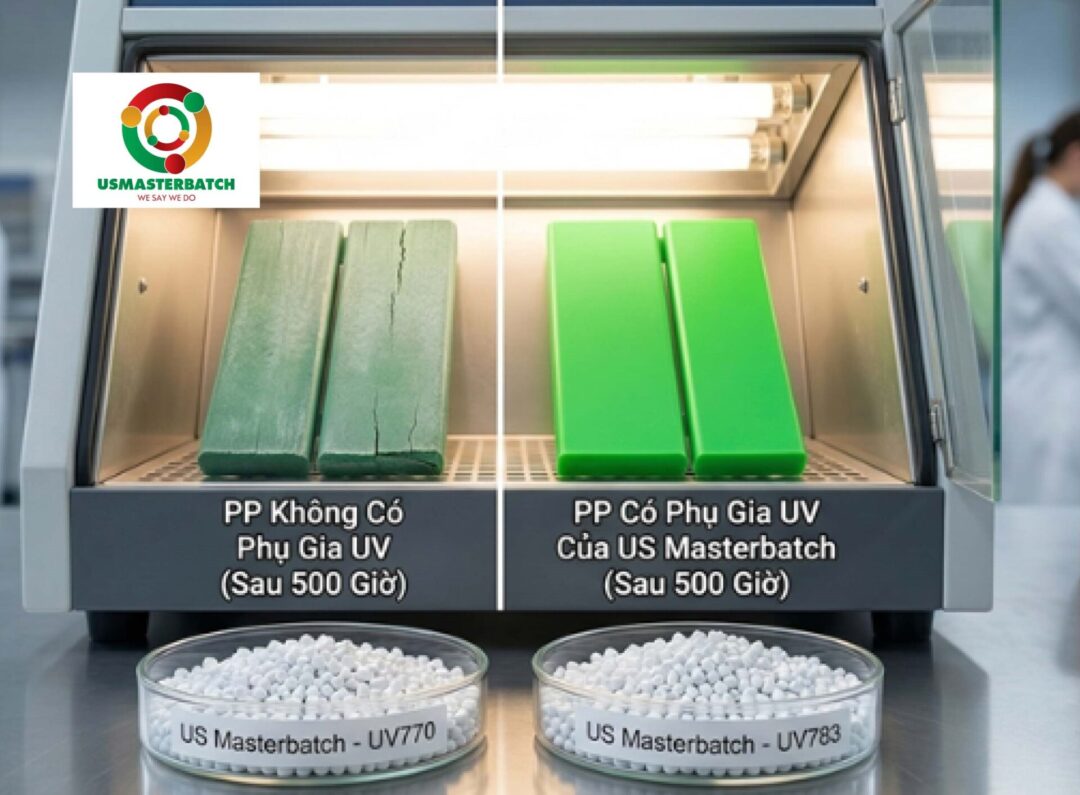
(Illustrative purposes only)
To effectively halt the degradation of PP, US Masterbatch produces high-performance UV Masterbatches based on two industry-leading chemical stabilizers: UV770 and UV783.
UV770-Based Additives (Low Molecular Weight HALS)
UV770 belongs to the HALS (Hindered Amine Light Stabilizers) family.
- Mechanism: It doesn’t just absorb UV light; it actively “traps” free radicals as they form, stopping the chain reaction of polymer destruction.
- Best For: Thin sections like fibers, tapes, and films. It offers exceptional surface protection without altering the product’s original color.
UV783-Based Additives (Synergistic HALS Blend)
UV783 is a sophisticated blend of low and high molecular weight HALS.
- Mechanism: This combination provides a “best of both worlds” approach. The high molecular weight component ensures low volatility (the additive stays inside the plastic), while the low molecular weight component provides rapid radical scavenging.
- Best For: Thick-walled parts and products requiring extreme long-term weatherability. It is the gold standard for products exposed to the elements for several years.
Conclusion
UV resistance is the “silent guardian” of your plastic products. Neglecting the impact of solar radiation doesn’t just shorten the physical life of the polymer; it causes economic loss and damages consumer trust.
Selecting the right UV stabilizer — at the right dosage from the right partner — is the key to making Polypropylene a truly durable material for the global market.
Contact US Masterbatch for Expert Consultation
Are you facing issues with fading colors or brittle products? Are you looking to optimize your formula for a new export contract?
US Masterbatch is here to help. We are committed to providing UV770 and UV783 solutions that meet international standards, ensuring your products stand the test of time and tide.
Contact us to receive detailed technical advice from the US Masterbatch team on the most suitable Masterbatch for your production line and technical requirements. We are always ready to support you in improving product quality and optimizing production efficiency!
📧 Email: info@usmasterbatch.com